Christmas projection: How projections make your home glow this season
Christmas projection can change the way you celebrate by turning everyday surfaces into a stage. Imagine stepping into your lounge and seeing soft snow drifting across the wall. Imagine your window glowing with animated candles that flicker to the beat of a carol. This paragraph sets the scene and invites you in with a clear, friendly voice. You don’t need a theatre or a big budget. You need a projector, some image files or a simple app, and a bit of creativity. Projections are flexible. They scale up or down. They work in small flats and in double-storey houses. The emotional pull comes from motion and light. Movement grabs attention. Colour warms the mood. Together they tell short visual stories that feel personal. You’ll notice faces light up, kids pause, and groups slow down to watch. That reaction is what makes projections so compelling at Christmas.
What a projection actually is and why it feels so special
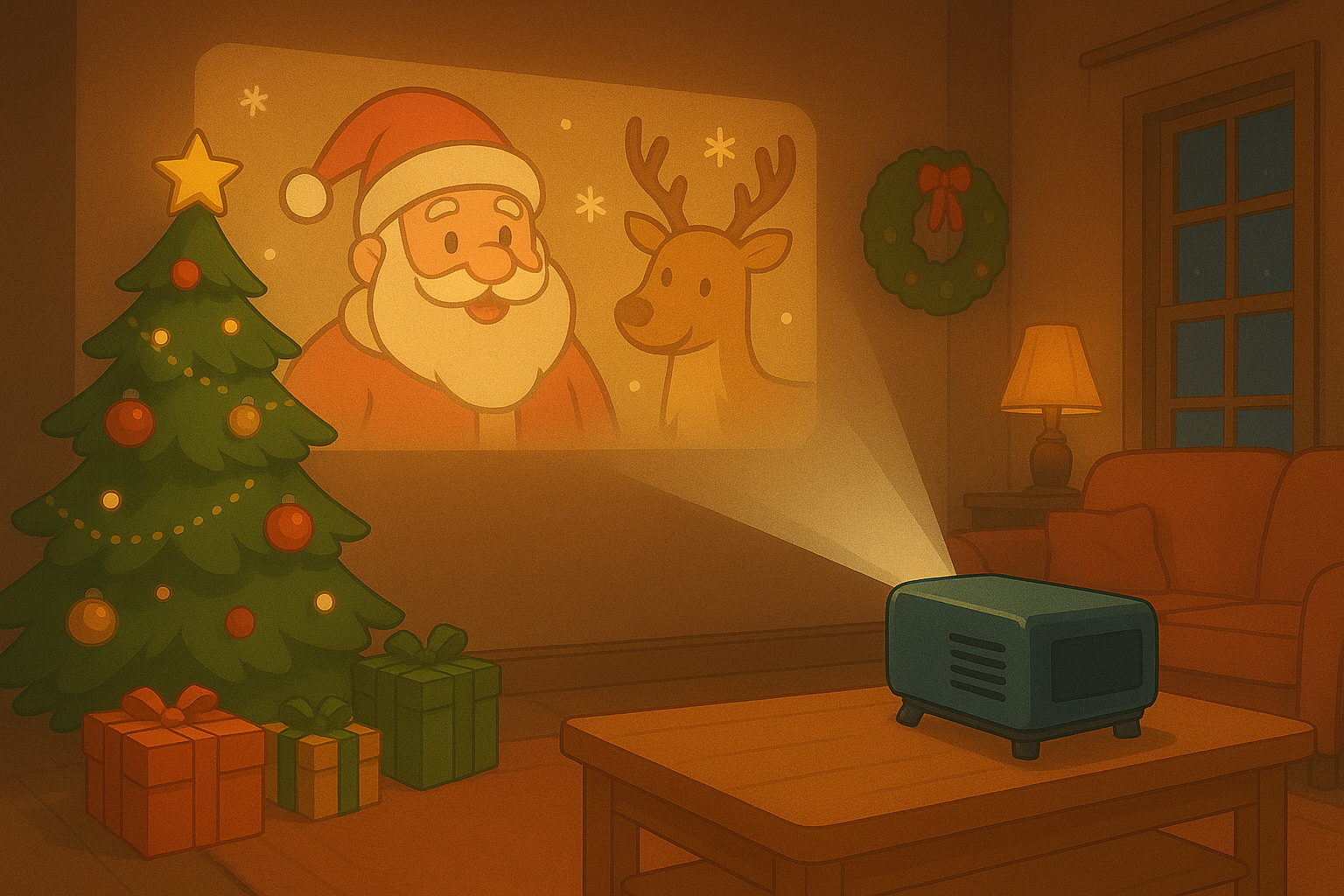
Christmas projection works like painting with light. A projector casts shapes, colours and motion onto a surface. The image can be still, but it’s the moving elements that pack the emotional punch. Light suggests warmth, stars, candles and snowfall without needing real flames or messy glitter. A moving image taps memory and imagination. It can hint at childhood scenes or create new ones. When a family watches projected snow or a flickering hearth, the scene becomes a shared moment. Projections are immersive because they surround your view. They fill a space without changing it. That’s practical. You keep the same furniture and the same room layout. But the atmosphere changes dramatically. The brain recognizes patterns, motion and contrast very quickly. That quick recognition triggers feelings: comfort, wonder, nostalgia. Plus, projected scenes can be gentle or dramatic. You can go subtle with warm glows, or bold with animated rooflines and animated bells. This makes projections perfect for different moods across the season. The tech also allows easy swapping. Change a scene in minutes to match an event or a playlist. That adaptability is rare in traditional decor.
Basic gear and how the technology works
Christmas projection relies on a few simple pieces of kit. You need a projector, power, a surface and some content. Projectors come in different brightness levels measured in lumens. For indoor use in dim rooms, a modest lumen count does the job. For window displays viewed from outside, you’ll want more brightness. The projector reads files or streams an app and converts them into light. Lenses focus and shapes the beam. Distance and angle change image size and sharpness. You can use short-throw projectors for tight spaces. You can also use small pico projectors for portable setups. A plain wall, a sheet, frosted glass or a curtain all work as surfaces. Each surface alters texture and mood. Smooth white walls keep images crisp. Curtains add softness. Frosted glass diffuses light and looks magical at night. And the content? Files can be simple loops of falling snow, animated fireplaces, or animated scenes with characters and gentle motion. There are apps and libraries tailored for holiday scenes. Some content comes with alpha channels so you can layer effects. That means you can project moving lights over a real tree or furniture and make them appear interactive. The tech is forgiving. You can start small and upgrade as you go.
Creative ideas for living rooms and window displays
Christmas projection opens up playful and subtle design choices for your home. You can use projections to highlight a single corner or to turn an entire façade into a show. One idea is to project a slow-moving fireplace on a blank wall when you want atmosphere without the heat or safety concerns of real flames. Another is to use window projections that face the street so passersby can enjoy a mini light show. Christmas projection can also transform family photos into animated collages. Make clouds drift across a photo of a beach holiday, or add falling leaves to an autumn picture for visual contrast. You can map the projection to objects, too. Project a wreath design onto a round mirror or project twinkling lights across a bookshelf. For small homes, keep scenes simple and calm. Use only one or two animated elements. That prevents visual clutter. For parties, build a playlist of short scenes that change every few minutes. Sync the projection with music for a show that feels curated. These ideas work whether you live in a compact apartment in Sydney or a house in Melbourne. The goal is to use light to tell short stories that match your vibe.
Step-by-step setup and practical tips
Christmas projection is approachable when you break it into steps. First, choose the surface and measure it. This helps you pick projector distance and lens. Second, pick content and test it on a laptop or phone. Third, place the projector on a stable table, shelf or mount it to a tripod. Make sure vents aren’t blocked. Fourth, connect power and source, then focus the lens. Fifth, dim the room lights and make small adjustments until the image looks right. Keep safety in mind. Secure cables and avoid placing projectors where they might get knocked over. For outdoor-facing windows, seal gaps to prevent moisture. If you need more brightness, move the projector closer or increase lumens. If the image is too sharp and harsh, soften it with a curtain or diffusion sheet. To avoid startling neighbours, keep scenes friendly and moderate volume if you add sound. Test angles at different times of night to see how ambient street lighting affects the result. Finally, save your favourite scenes into a playlist so you can switch moods fast. With a little trial and error, you’ll have a reliable seasonal setup that you can reuse year after year.
Storytelling, mood and community spirit
Christmas projection helps you tell small stories that feel big. Instead of buying one expensive item, you can curate a sequence of scenes: falling snow, children building a snowman, a welcoming street, and a close-up of candles. Each scene lasts a minute or two and builds a tiny arc. Music or ambient sound adds another emotional layer. Use soft carols for gentle scenes and upbeat tunes for lively moments. Christmas projection also brings communities together. Window displays can delight passersby and spark conversation. Neighbours compare playlists and swap tips. You can even host a projection night where families walk by and enjoy a short show. The emotional power comes from motion and timing. Well-timed flickers or a sudden reveal create little surprises that linger. They are the moments people remember. For people who live alone or far from family, projections can add warmth and connection without big effort. For hosts, they make gatherings feel curated and intentional. In short, projections transform light into shared memory.
Safety, local rules and next steps
Christmas projection is low risk, but a few practical rules help keep it smooth. Check power loads and avoid daisy-chaining extension cords. Keep projectors on stable surfaces and away from liquids. When you project outdoors, use weatherproof solutions or keep kit inside and shoot through a sealed window. Be mindful of local council rules about lighting that faces public areas, especially if you plan a large facade show. If you want a bigger display without the fuss, consider hiring a local installer. They can recommend gear and handle mounting and weatherproofing. Renting is a smart option for one-off events or if you want a high-brightness projector for a weekend. Start with one small scene and see how people react. Tweak brightness, content and placement. That hands-on learning is the fastest route to confident setups. When you get the hang of it, you’ll find new reasons to use projections beyond Christmas. They are a tool for atmosphere all year round. Give it a go and let light tell your next story.
Popular projections